My 2 cents on the movie and how it could have been better.
Monday, 4 April 2016
How Batman vs Superman: Dawn of Justice could h... - Posts - Quora
Link: How Batman vs Superman: Dawn of Justice could h... - Posts - Quora

Saturday, 4 July 2015
The Luxury of Homosexuality
A wave of happiness swept through the world as people celebrated the decision of United States Court to legalize homosexual marriages. People were happy as this marks a significant step forward in the freedom in living their lives.
The biggest relief must be to the people who have always loved someone of the same gender, wanted to spend life with them, but the world (legal system) did not allow them to. They have had to hide their feelings, face awkward questions and situations. Those are the people who will be ecstatic, as if the doors of the cage are now open.
There has been a lot of debate since ages regarding homosexuality. Religions have called it a sin. Men and women have been punished to death for being homosexual. It is unnatural even today to major populations around the world. Why is that? I have tried to analyze it from a scientific perspective.
Earth formed approximately 4 billion year ago, and the first forms of life, appeared approximately 2-2.5 billion years ago. Life initially appeared as single celled organisms, and through a very long and complex evolution process has able to reach to the peak of their perfection - humans. It is fascinating story of what began as a single cell millions of years ago has evolved to a highly intelligent life and dominates the earth now.
As we think about how life originated, the one thing that comes to the mind is - reproduction - continuation of life. Life on our planet has always had a finality to it, organisms didn’t live forever and were bound by a lifespan. But every organism had a innate desire to live forever. But since it could not, nature allowed them to cheat, and pass on whatever they had to another life form before they could die. This cheating is known as reproduction.
As we think about it, reproduction, in the most trivial way, is a way to ensure survival of one’s knowledge/information with the passage of time. Reproduction throughout the ages has evolved from asexual reproduction (no partner required) to sexual reproduction - one that required male and female species to produce an offspring. But the underlying concept hasn’t changed. Reproduction is a method that ensures the survival of species and the information it accumulated with the passage of time.
Information does not mean Math or Science. In its truest forms, information is the cell structure, the DNA. When wolves produces an offspring, it ensures that however nature evolved them to being a wolf, that DNA, that cell structure, continues to produce another wolf. Reproduction allows an organism to replicate evolution. That is how life flourished. Even the flora has the same concept, the fruits that are produced bear the seeds of life. It is a beautiful thing if you think about it, reproduction is a short cut to produce something that took millions of years to evolve, and it is woven into the fabric of life here on Earth.
Now, let us jump back to homosexuality. What is the only thing a homosexual couple cannot do? Reproduce. Sure, they can live a life together, cook together, have sex, enjoy trips, grow old together. But biologically, they cannot reproduce. Do you see now, that is the violation of the principle of evolution right there. Sure, there is a slight amount of homosexuality observed in some species, but that does not mean they do not participate in the process of reproduction.
But we, as humans, are different from the other species on our planet. We are able to create complex thought patterns, emotions, which makes us truly special. In a very short span of time, humans emerged as the dominant species on earth. We were able to tame domestic animals, defend against and restrict wild animals, and were able to rule earth. We learnt, created new things, thought new things, and created the society we knew today. Today it is much more than - eat, sleep, reproduce. We have a complex way of living life woven around these basic parameters of life.
Earth’s population today is 7 billion, and it was always in millions since we have a history. Accounts of homosexuality have been found across the history, it is not a new phenomenon. We have the concept of emotions and freedom. When a man/woman wants to live with another man/woman, what is wrong in that? Sure, they cannot reproduce. But who needs that? “There are so many people in the world anyways.” That single statement, is why, homosexuality can be tolerated now.
There is so much population right now, humanity has surpassed the point of extinction. It is very hard to make humans extinct right now. So, once our basic needs to survival have been fulfilled, the mind can think in other directions. It does not need to constantly think about reproduction, as our priorities do not include the survival of our species.
So, in my view, homosexuality is a luxury that humans can afford. As we have surpassed our needs of evolution, we can afford a few emotional luxuries. It is the moral right of a man and woman in today’s world to live as they want to. That is the freedom, the luxury that humanity can afford right now. I think we have earned it as a right of evolution, by being very intelligent, by making sure that a handful of people who do not reproduce will not make any difference to the survival of humanity as a whole. From an emotional perspective, I feel that right to think and feel is the biggest right that humanity has gained. There is nothing wrong in two people who want to live together, no matter whatever be the gender.
So, rejoice people. Your cage is now open. But let me present you with a situation. Suppose, for some reason, there is a catastrophe on Earth. And all the humans couldn’t survive, expect for one gay male and one lesbian woman. Will they reproduce? I think the answer is yes, because at that time, they cannot afford to be homosexual.
The biggest relief must be to the people who have always loved someone of the same gender, wanted to spend life with them, but the world (legal system) did not allow them to. They have had to hide their feelings, face awkward questions and situations. Those are the people who will be ecstatic, as if the doors of the cage are now open.
There has been a lot of debate since ages regarding homosexuality. Religions have called it a sin. Men and women have been punished to death for being homosexual. It is unnatural even today to major populations around the world. Why is that? I have tried to analyze it from a scientific perspective.
Earth formed approximately 4 billion year ago, and the first forms of life, appeared approximately 2-2.5 billion years ago. Life initially appeared as single celled organisms, and through a very long and complex evolution process has able to reach to the peak of their perfection - humans. It is fascinating story of what began as a single cell millions of years ago has evolved to a highly intelligent life and dominates the earth now.
As we think about how life originated, the one thing that comes to the mind is - reproduction - continuation of life. Life on our planet has always had a finality to it, organisms didn’t live forever and were bound by a lifespan. But every organism had a innate desire to live forever. But since it could not, nature allowed them to cheat, and pass on whatever they had to another life form before they could die. This cheating is known as reproduction.
As we think about it, reproduction, in the most trivial way, is a way to ensure survival of one’s knowledge/information with the passage of time. Reproduction throughout the ages has evolved from asexual reproduction (no partner required) to sexual reproduction - one that required male and female species to produce an offspring. But the underlying concept hasn’t changed. Reproduction is a method that ensures the survival of species and the information it accumulated with the passage of time.
Information does not mean Math or Science. In its truest forms, information is the cell structure, the DNA. When wolves produces an offspring, it ensures that however nature evolved them to being a wolf, that DNA, that cell structure, continues to produce another wolf. Reproduction allows an organism to replicate evolution. That is how life flourished. Even the flora has the same concept, the fruits that are produced bear the seeds of life. It is a beautiful thing if you think about it, reproduction is a short cut to produce something that took millions of years to evolve, and it is woven into the fabric of life here on Earth.
Now, let us jump back to homosexuality. What is the only thing a homosexual couple cannot do? Reproduce. Sure, they can live a life together, cook together, have sex, enjoy trips, grow old together. But biologically, they cannot reproduce. Do you see now, that is the violation of the principle of evolution right there. Sure, there is a slight amount of homosexuality observed in some species, but that does not mean they do not participate in the process of reproduction.
But we, as humans, are different from the other species on our planet. We are able to create complex thought patterns, emotions, which makes us truly special. In a very short span of time, humans emerged as the dominant species on earth. We were able to tame domestic animals, defend against and restrict wild animals, and were able to rule earth. We learnt, created new things, thought new things, and created the society we knew today. Today it is much more than - eat, sleep, reproduce. We have a complex way of living life woven around these basic parameters of life.
Earth’s population today is 7 billion, and it was always in millions since we have a history. Accounts of homosexuality have been found across the history, it is not a new phenomenon. We have the concept of emotions and freedom. When a man/woman wants to live with another man/woman, what is wrong in that? Sure, they cannot reproduce. But who needs that? “There are so many people in the world anyways.” That single statement, is why, homosexuality can be tolerated now.
There is so much population right now, humanity has surpassed the point of extinction. It is very hard to make humans extinct right now. So, once our basic needs to survival have been fulfilled, the mind can think in other directions. It does not need to constantly think about reproduction, as our priorities do not include the survival of our species.
So, in my view, homosexuality is a luxury that humans can afford. As we have surpassed our needs of evolution, we can afford a few emotional luxuries. It is the moral right of a man and woman in today’s world to live as they want to. That is the freedom, the luxury that humanity can afford right now. I think we have earned it as a right of evolution, by being very intelligent, by making sure that a handful of people who do not reproduce will not make any difference to the survival of humanity as a whole. From an emotional perspective, I feel that right to think and feel is the biggest right that humanity has gained. There is nothing wrong in two people who want to live together, no matter whatever be the gender.
So, rejoice people. Your cage is now open. But let me present you with a situation. Suppose, for some reason, there is a catastrophe on Earth. And all the humans couldn’t survive, expect for one gay male and one lesbian woman. Will they reproduce? I think the answer is yes, because at that time, they cannot afford to be homosexual.
Saturday, 4 April 2015
The Hidden Costs That Engineers Ignore
Link: The Hidden Costs That Engineers Ignore
Complexity - be it of any kind- drastically effects your software. Researching on how to cut down complexity is very important for any company.
Sometimes it makes sense to spend more time on design. Building software in blocks always helps, as it has the chance to scale up exponentially. Everything should be thought as loosely coupled modules talking to each other over an interface, sounds easy, but lot difficult while implementing.
If this basic principle is kept in mind while starting to develop software, we can minimize the complexity that hogs down the entire system as things go uphill in the future.
Very nicely summarized in this article.
Complexity - be it of any kind- drastically effects your software. Researching on how to cut down complexity is very important for any company.
Sometimes it makes sense to spend more time on design. Building software in blocks always helps, as it has the chance to scale up exponentially. Everything should be thought as loosely coupled modules talking to each other over an interface, sounds easy, but lot difficult while implementing.
If this basic principle is kept in mind while starting to develop software, we can minimize the complexity that hogs down the entire system as things go uphill in the future.
Very nicely summarized in this article.
Wednesday, 1 April 2015
The Science Of Why You Should Spend Your Money On Experiences, Not Things
Link: The Science Of Why You Should Spend Your Money On Experiences, Not Things
Experiences make us happy. Not things.
Monday, 23 March 2015
Creating a startup is very similar to Frodo’s journey. You need a good co-founder like Samwise Gamgee, and good faith from the investors like The Fellowship.
It is a long and tiring journey, and the pressure is enormous. Too many people, the elves, dwarves, hobbits and men look up to you to do the right thing. You may want to give up several times. Infact, when you are so close to the finish line, you may feel like backing out. But in the end, the ones who persist, like Frodo did, end up being successful.
So next time you think you can have your own startup, ask yourself this, can you be Frodo?
Monday, 12 May 2014
Increase the Battery Life of your Android Phone
We all love a fancy android phone right? But the problem with all the phones is that since they do too much, they have a very short battery life. The problem has worsened with the arrival of apps like Google Now and Google Services which constantly ask your device for a location and keep it active all the time, even if your phone is locked away.
I am telling 4 ways in which you can increase the battery life, based on the level of hacking you have to do to get it done, please read the gotchas before proceeding. If you apply any particular step and find it useful, please share it in the comments. Would be happy to know the tricks are working.
When you lock the phone screen, Android goes into a sleep state, where it shuts off the processor to a very basic configuration required to just keep the phone on. Battery consumption in sleep state is almost minimal, but the problem is that, apps do not allow the phone to remain in the sleep state, and have a permission to wake up the phone - something known as a wakelock.
These wakelocks consume a lot of battery life, since they continue to eat mobile battery even when your mobile is asleep. So the solution is to disable all those wakelocks. Unfortunately, android does not simply allow you to do that, and for that you will have to root your phone to gain special permissions in order to do it.
Once it is rooted, follow the steps below:
When you buy a phone, your phone comes with some modified version of android. Depending upon the manufacturer (e.g. Samsung, HTC, Sony etc.) you may have a number of apps that are not required for the pure android experience the kind of given by Nexus devices. Even people with Nexus devices can install this for the level of customization offered by this OS.
Cyanogemod is an extension of Android Open Source Project (AOSP) and they are one the largest group of developers trying to bring the pure and latest android experience to the android community. There are many other operating systems available as per your device, but this is the most famous one and most widely used one with developer support.
Once installed, follow the below steps:
Also, installing a custom OS may stop some of the functions of the phone, please read very very carefully about the known issues before installing. Usually you can find the known issues on the developer pages.
The inspiration behind all this hacking was the announcement of Samsung that Kitkat won’t be coming to Samsung Galaxy S3. So I installed Cyanogenmod and kept discovering all this. Here is the screenshot of my battery life:

Previously I used to get to 50% in 13 hours with 2-3 hours of screen time. Now I can remain at 70% using the screen time since at the rest of the times, my device remains in the sleep mode and there is minimal battery consumption. Note that my wifi was on majority of the time and the phone was awake only when sceen was on. Proven results.
If you have any doubts, please feel free to comment. Happy Hacking !!!! Thanks a lot to Cyanogenmod community, XDA Developers Forum and Reddit.
I am telling 4 ways in which you can increase the battery life, based on the level of hacking you have to do to get it done, please read the gotchas before proceeding. If you apply any particular step and find it useful, please share it in the comments. Would be happy to know the tricks are working.
Turning off useless syncs
Information
Google syncs your account information in the background and this increases data usage as well as eats your battery. Not all of the information is required to be synced in the background, you can turn off the non-essential syncs to gain battery life.Steps
- Go to Settings > Accounts > Google
- Here you can see everything Google is keeping in sync burning your precious battery, turn off anything you are not using or do not require to be up to date
Gotchas
For example, for an average user, I think only Gmail, Calendar and Chrome matters the most, rest of the things like Google+, Google Photos, Google Playstand, Contacts, Music etc. can be turned off safely. Dont worry, they will get updated when you open those apps, its just that they won’t be running syncs in background.Turning off Location services
Information
Google keeps a track of everywhere you go by something known as Location Services. It uses your WiFi and your mobile data connection to give you location based services, and it tracks your locations even if the mobile is asleep, giving google a step by step history of where have you been, how much you have travelled etc. To know how much Google knows about you, login to Google Location History and surprise yourselves. Apart from the privacy concerns, Location Services uses a lot of battery.Steps
To turn off Location syncs, do the following steps:- Go to Settings > Location
- Turn off Location access
Gotchas
The downside of disabling Location Services is that apps using Location access would not work now, Google Now would be crippled, apps like Facebook, Quizup etc. would not be able to get Location access. Please do not do this if you want to continue getting Location services in your apps at the expense of battery.Installing Xposed Framework and revoking wake up permissions (requires root)
Information
Ok so this is a little complicated than the previous methods, and for this you will require a basic knowledge of how things work in Android.
These wakelocks consume a lot of battery life, since they continue to eat mobile battery even when your mobile is asleep. So the solution is to disable all those wakelocks. Unfortunately, android does not simply allow you to do that, and for that you will have to root your phone to gain special permissions in order to do it.
Steps
Just google ‘how to root xxx’ where xxx = name of your device and you will get a step by step guide of how to root your phone.
Once it is rooted, follow the steps below:
- Download Xposed Installer
- Go to Installer > Install/Update and reboot your phone
- After the reboot, go to Xposed Installer > Downloads and search for Per App Hacking and install its latest version
- Once installed, go to Xposed Installer > Modules and enable the module
- Open the Per App Hacking module and search for Google Play Services and Google Search, tick the prevent wake lock option
Gotchas
Note that this method can void the warranty of your device and you have been warned. But you can safely restore the warranty by unrooting it, steps available by googling it.
Installing Cyanogenmod (requires a little hacking)
Information
Ok so this is the extreme step - installing another Operating System all together on your phone. This is for all those people who have been denied Kitkat update by their manufacturers and want to experience the fun of some android hacking.When you buy a phone, your phone comes with some modified version of android. Depending upon the manufacturer (e.g. Samsung, HTC, Sony etc.) you may have a number of apps that are not required for the pure android experience the kind of given by Nexus devices. Even people with Nexus devices can install this for the level of customization offered by this OS.
Cyanogemod is an extension of Android Open Source Project (AOSP) and they are one the largest group of developers trying to bring the pure and latest android experience to the android community. There are many other operating systems available as per your device, but this is the most famous one and most widely used one with developer support.
Steps
You can follow the steps given on the official Cyanogenmod website on how to install cyanogenmod on your device.Once installed, follow the below steps:
- Go to Settings > Privacy > Privacy Guard
- Click on Advanced at top right corner of the screen
- Select any app you want and disable the permissions: Keep Awake and Wake Up
- You can also remove other permissions like Location etc. based on your privacy concers
Gotchas
Installing custom OS can void your warranty and can even brick your phone if not done carefully. That said, please proceed at your own risk. I will not be held responsible for anything that happens to your phone.Also, installing a custom OS may stop some of the functions of the phone, please read very very carefully about the known issues before installing. Usually you can find the known issues on the developer pages.
Conclusion
Whoa!!!! That were a lot of steps. If you follow any steps and find the results interesting, or even have some better solutions, please share it in the comments.The inspiration behind all this hacking was the announcement of Samsung that Kitkat won’t be coming to Samsung Galaxy S3. So I installed Cyanogenmod and kept discovering all this. Here is the screenshot of my battery life:
Previously I used to get to 50% in 13 hours with 2-3 hours of screen time. Now I can remain at 70% using the screen time since at the rest of the times, my device remains in the sleep mode and there is minimal battery consumption. Note that my wifi was on majority of the time and the phone was awake only when sceen was on. Proven results.
If you have any doubts, please feel free to comment. Happy Hacking !!!! Thanks a lot to Cyanogenmod community, XDA Developers Forum and Reddit.
Saturday, 16 November 2013
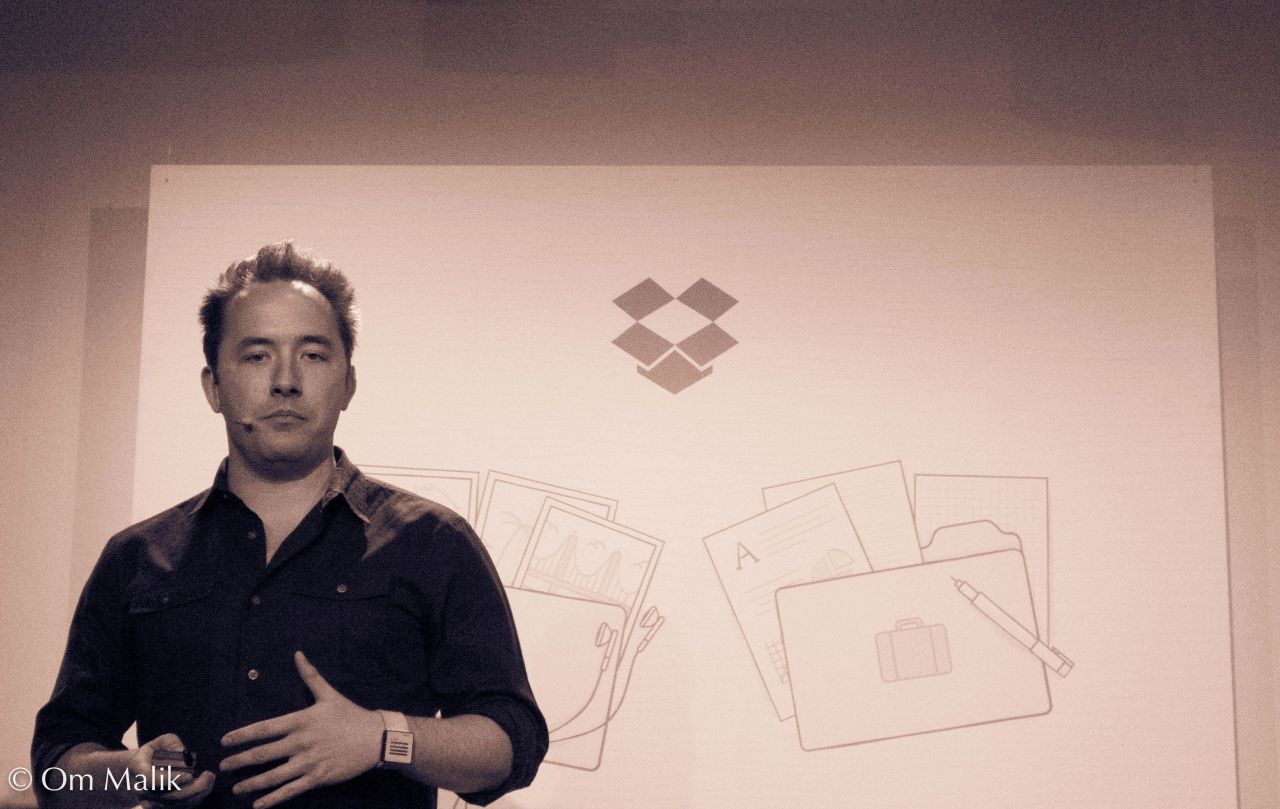
How Amazon enables businesses that cross multiple layers.
New startup economics: Why Amazon (web services) and Dropbox need each other
Om Malik, gigaom.com
Earlier this week, I stopped by at the offices of Dropbox, the San Francisco-based online storage and syncing service. It was quite amazing to walk through the company’s sprawling offices — the company now employs about 470 people. Five years ago,…
Wednesday, 1 May 2013
Trek of a Lifetime
On 26th April, I had my first trek in life. It was a trek from Katraj to Sinhagad night trek. It is roughly 20 km, and you have to cross a 7 mountains and a few hills.
We were 12 people and we started the trek by boarding the bus from Swargate to Katraj. We were all loaded, we had with us heavy bags filled with water bottles, bananas (because nothing gives energy like a banana), glucose packets, biscuits and torches. At roughly 9.45 PM, we reached Kartaj Old Tunnel, which is the starting point of the trek. We started the trek, and it was pretty amazing and easy at first, it was mostly a walk over the hilltops. And that is how this trek is, there is no tough trekking part, its just that it is a very long trek. One of us, Kaushik, had already done this trek before, and we estimated that we’d reach the Sinhagad fort by morning before sunrise.
We had chosen a full moon night so that we could see easily in the dark. We climbed the first small hill, and then we could see the red beacon, our target. In the whole trek, you can see the tower on Sinhagad fort with red beacon on the top, which is like the Pole Star of the trek, there is only the beacon to measure the direction and decide the path. There we took our first break, we sat for some time, and then continued going.
The trek is supposed to be fairly very easy, but it took a very dangerous turn for us, because we went on a wrong path. There was a path, from where we were supposed to go to the right side and climb the mountain in a straightforward and easy path, but in the fun and frolic and the mood of the trek, we took the wrong path. There was a narrow road circumventing the hill, and we started walking on the road. As we continued walking, the road got narrower, and at some point, the road came to a dead end. So instead of going back and finding a new route, we thought we should climb the mountain from there itself. So, we looked up, it was may be 500-600 meters ascend, and, from the look of it, looked pretty normal.
As we started to climb the mountain, the climb got a bit trickier. It was a 60-70 degrees slope, and the toughest part about it was that, there was nothing to hold on to. We struggled a lot to climb, and at some point of time, the struggle to climb became the struggle to survive. There was mostly mud on the slope, which we cannot hold on to, so as we climbed up, there was a risk of slipping and falling down into the valley, and that would mean only death.
We climbed by holding on to anything we could get, sand, rock, trees and even thorns. It hurt a lot, I could see blood running from my hands when I tried to pull myself up grabbing a trunk of a small bush that had lot of thorns. But, I did not feel the pain, because if I did not climb up, there was no way we could climb down, the descend would be uncontrollable and we would slip down and fall into the valley. Some of us made to the top, including me, and then we realized the grim reality - some of us are still far down and, from the look of it, they were stuck.
We people at the top tried to help them by highlighting the paths with the torches, and then slowly people started climbing up. First 2, then 5, then 6, then 9. 9 people climbed the hill with nothing but sheer determination. And then we realized, Shafi had slipped down and just grabbed on to a tree and was sitting on a rock, he was in a state of shock and was just sitting there not speaking anything. And Vishal was just hanging with Kaushik holding him, he had no energy left in legs to push himself up, he was neither in a comfortable state where he could sit and gain his strength.
We were all in a state of shock, Tejas thought we should call the police and get us somewhere safe, let alone complete the trek. But in such a remote place, there was no cellphone signal, and even if we managed to get one, where should we tell the police to come? As the people at the top were thinking all this, we were surprised to see Shafi climbed up from another path and suddenly appeared on the top and cried for help, immediately I, Harshad and Tejas went there and pulled him up. He had done an amazing feat by climbing on a path, having torch in his mouth and not tiring until he reached the top.
Meanwhile, Vishal had reached a comfortable rock and he told us that someone will need to come down and grab him up, Kaushik had no stamina left to push him up. Our rockstar, Nikil (first one to climb the mountain, our own Rajnikanth), told that he would go down to help him. Nikil went down, half an hour later, we saw Vishal reaching the top, and Nikil following up. It was a sense of relief like nothing before, we had the feeling we had fought and conquered death itself.
All of us sat there, speaking nothing, just trying to swallow the feeling of how we had, for a moment, thought that this was the last day of our lives. As we were sitting there, looking at the clear sky, looking down at the slope every now and then to see what we had accomplished. We had spent 3 hours on the mountain, and we were behind schedule, it was now impossible to make it to the destination before sunrise.
Still, we had the option of turning back, go down the mountain another path and stop the trek, but we decided to continue what we came for. After 15 minutes, we all stood up, and continued the path. But from now on, we all decided to stick to the easy path, and take the help of markers which were laid down to help us decide if we were on the right path.
After that, it got pretty easy. We were climbing up and down mountains and hills, and enjoying the walk in the moonlight. At one point, everyone just stopped. Tejas had spotted something in the bushes, it was glowing in the torch light, and on a closer look, it seemed like a pair of eyes. We all had our fears up, it was some wild animal. All of us picked up stones in our hands, pointed torches and took steps together. To our surprise, it was just a cat, and ran away when we approached closer. We all had a hearty laughter.
As we continued moving further and crossing mountains, the red beacon stayed at its place, it did not appear to get closer. The more mountains we climbed, the more mountains we saw between us and the destination. We could not go back, infact, there was no going back. There was no human population there, nothing but plain lands and valleys below, there was only one path - going forward.
As we continued the trek, fatigue started to take a toll on us. We had started exhausting all our supplies, we were taking frequent breaks, and it was getting very tiring just to climb a small hill. And we knew that there would be sunrise and after that, it would be impossible to continue the trek in the heat. We moved on, but could not defeat the sun in the race. At one point of time, we saw that we had just one more mountain to climb. After we climbed that, we got another shock - we had two more to climb, and from the looks of it, they were big ones, and already sun was continuously coming on our heads and it was getting hotter every moment.
We wanted to rest, but time was short, because the more we rested, the hotter it would get. And we had no water, it was impossible to climb without water, we were dehydrated. We had crossed several mountains and hills and now every step we took produced pain the legs. But anyways we started to climb the first mountain, it was very difficult, but we did it. And then we saw, the last mountain, it was very high. It had a very steep slope. None of us had the stamina to go on. We saw a road below, and a small village. We were very excited to see it. After a lot of debate, we decided to climb down the mountain to the village, and return back without reaching Sinhagad.
We climbed down, it was a very long path, but we finally reached a well. One of the villagers fetched water from the well and we drank from it. It was the sweetest water anyone had in their life. We then asked the locals and, to our surprise, we could reach Sinhagad top by jeeps. We boarded one, and then reached to the top, and relaxed in a tapri (small roadside restaurant). We ate a lot, we ate bhakri and pithla, had the most amazing chaash (taak, is what they call) and dahi from the matki. It was re-vitalizing. Shafi had no stamina to eat and just threw his backpack and slept on the floor of the tapri, we had to wake him up with great effort.
Then we departed, some of us took a direct car to Swargate, and some of us took the jeep to a nearby village and from there took a bus to Swargate. The trek was over, and when we looked back, we were so proud, we had achieved an amazing feat. At one point, it got so scary we thought we’d die, and at one point, it was impossible to take even one step ahead in the scorching sun, but we fought, geared up our willpower, and we did it. It was an amazing trek, one that cannot be forgotten in a lifetime.
We were 12 people and we started the trek by boarding the bus from Swargate to Katraj. We were all loaded, we had with us heavy bags filled with water bottles, bananas (because nothing gives energy like a banana), glucose packets, biscuits and torches. At roughly 9.45 PM, we reached Kartaj Old Tunnel, which is the starting point of the trek. We started the trek, and it was pretty amazing and easy at first, it was mostly a walk over the hilltops. And that is how this trek is, there is no tough trekking part, its just that it is a very long trek. One of us, Kaushik, had already done this trek before, and we estimated that we’d reach the Sinhagad fort by morning before sunrise.
We had chosen a full moon night so that we could see easily in the dark. We climbed the first small hill, and then we could see the red beacon, our target. In the whole trek, you can see the tower on Sinhagad fort with red beacon on the top, which is like the Pole Star of the trek, there is only the beacon to measure the direction and decide the path. There we took our first break, we sat for some time, and then continued going.
The trek is supposed to be fairly very easy, but it took a very dangerous turn for us, because we went on a wrong path. There was a path, from where we were supposed to go to the right side and climb the mountain in a straightforward and easy path, but in the fun and frolic and the mood of the trek, we took the wrong path. There was a narrow road circumventing the hill, and we started walking on the road. As we continued walking, the road got narrower, and at some point, the road came to a dead end. So instead of going back and finding a new route, we thought we should climb the mountain from there itself. So, we looked up, it was may be 500-600 meters ascend, and, from the look of it, looked pretty normal.
As we started to climb the mountain, the climb got a bit trickier. It was a 60-70 degrees slope, and the toughest part about it was that, there was nothing to hold on to. We struggled a lot to climb, and at some point of time, the struggle to climb became the struggle to survive. There was mostly mud on the slope, which we cannot hold on to, so as we climbed up, there was a risk of slipping and falling down into the valley, and that would mean only death.
We climbed by holding on to anything we could get, sand, rock, trees and even thorns. It hurt a lot, I could see blood running from my hands when I tried to pull myself up grabbing a trunk of a small bush that had lot of thorns. But, I did not feel the pain, because if I did not climb up, there was no way we could climb down, the descend would be uncontrollable and we would slip down and fall into the valley. Some of us made to the top, including me, and then we realized the grim reality - some of us are still far down and, from the look of it, they were stuck.
We people at the top tried to help them by highlighting the paths with the torches, and then slowly people started climbing up. First 2, then 5, then 6, then 9. 9 people climbed the hill with nothing but sheer determination. And then we realized, Shafi had slipped down and just grabbed on to a tree and was sitting on a rock, he was in a state of shock and was just sitting there not speaking anything. And Vishal was just hanging with Kaushik holding him, he had no energy left in legs to push himself up, he was neither in a comfortable state where he could sit and gain his strength.
We were all in a state of shock, Tejas thought we should call the police and get us somewhere safe, let alone complete the trek. But in such a remote place, there was no cellphone signal, and even if we managed to get one, where should we tell the police to come? As the people at the top were thinking all this, we were surprised to see Shafi climbed up from another path and suddenly appeared on the top and cried for help, immediately I, Harshad and Tejas went there and pulled him up. He had done an amazing feat by climbing on a path, having torch in his mouth and not tiring until he reached the top.
Meanwhile, Vishal had reached a comfortable rock and he told us that someone will need to come down and grab him up, Kaushik had no stamina left to push him up. Our rockstar, Nikil (first one to climb the mountain, our own Rajnikanth), told that he would go down to help him. Nikil went down, half an hour later, we saw Vishal reaching the top, and Nikil following up. It was a sense of relief like nothing before, we had the feeling we had fought and conquered death itself.
All of us sat there, speaking nothing, just trying to swallow the feeling of how we had, for a moment, thought that this was the last day of our lives. As we were sitting there, looking at the clear sky, looking down at the slope every now and then to see what we had accomplished. We had spent 3 hours on the mountain, and we were behind schedule, it was now impossible to make it to the destination before sunrise.
Still, we had the option of turning back, go down the mountain another path and stop the trek, but we decided to continue what we came for. After 15 minutes, we all stood up, and continued the path. But from now on, we all decided to stick to the easy path, and take the help of markers which were laid down to help us decide if we were on the right path.
After that, it got pretty easy. We were climbing up and down mountains and hills, and enjoying the walk in the moonlight. At one point, everyone just stopped. Tejas had spotted something in the bushes, it was glowing in the torch light, and on a closer look, it seemed like a pair of eyes. We all had our fears up, it was some wild animal. All of us picked up stones in our hands, pointed torches and took steps together. To our surprise, it was just a cat, and ran away when we approached closer. We all had a hearty laughter.
As we continued moving further and crossing mountains, the red beacon stayed at its place, it did not appear to get closer. The more mountains we climbed, the more mountains we saw between us and the destination. We could not go back, infact, there was no going back. There was no human population there, nothing but plain lands and valleys below, there was only one path - going forward.
As we continued the trek, fatigue started to take a toll on us. We had started exhausting all our supplies, we were taking frequent breaks, and it was getting very tiring just to climb a small hill. And we knew that there would be sunrise and after that, it would be impossible to continue the trek in the heat. We moved on, but could not defeat the sun in the race. At one point of time, we saw that we had just one more mountain to climb. After we climbed that, we got another shock - we had two more to climb, and from the looks of it, they were big ones, and already sun was continuously coming on our heads and it was getting hotter every moment.
We wanted to rest, but time was short, because the more we rested, the hotter it would get. And we had no water, it was impossible to climb without water, we were dehydrated. We had crossed several mountains and hills and now every step we took produced pain the legs. But anyways we started to climb the first mountain, it was very difficult, but we did it. And then we saw, the last mountain, it was very high. It had a very steep slope. None of us had the stamina to go on. We saw a road below, and a small village. We were very excited to see it. After a lot of debate, we decided to climb down the mountain to the village, and return back without reaching Sinhagad.
We climbed down, it was a very long path, but we finally reached a well. One of the villagers fetched water from the well and we drank from it. It was the sweetest water anyone had in their life. We then asked the locals and, to our surprise, we could reach Sinhagad top by jeeps. We boarded one, and then reached to the top, and relaxed in a tapri (small roadside restaurant). We ate a lot, we ate bhakri and pithla, had the most amazing chaash (taak, is what they call) and dahi from the matki. It was re-vitalizing. Shafi had no stamina to eat and just threw his backpack and slept on the floor of the tapri, we had to wake him up with great effort.
Then we departed, some of us took a direct car to Swargate, and some of us took the jeep to a nearby village and from there took a bus to Swargate. The trek was over, and when we looked back, we were so proud, we had achieved an amazing feat. At one point, it got so scary we thought we’d die, and at one point, it was impossible to take even one step ahead in the scorching sun, but we fought, geared up our willpower, and we did it. It was an amazing trek, one that cannot be forgotten in a lifetime.
Sunday, 17 February 2013
Awesomeness at a startup
My life has been awesome since September ‘12 - when I got placed in Sokrati. Reading news articles about the startups at Silicon Valley or seeing The Social Network made me think it is not possible to have a company with such culture here in India, but when I stepped into Sokrati, my thoughts changed.
The first experience in a company comes from the interview process - which itself was very amazing and breathtaking. The level of the interview questions was amazing, and there were no stereotypical questions that you would see on thousands of interview websites. The questions were based on practical scenarios and fundamentals. It was an amazing experience, and I learned a lot even from the interviews.
Once I was inside the company, it was very nice to feel the startup culture all around me. The whole company sits in one office - and that amazed me because I was from Cognizant. As I spent more time in Sokrati - I came to understand one thing - unlike other places where office politics, stabbing in the back - such practices are common, people here had only one fundamental ideology - learn, code, help and enjoy. Everyone was full of energy, so ready to help others, so focused on work, and so full of life. This was so different from people in ties and formal shirts, this was the t-shirt culture. I had a feeling that my life was going to be awesome here.
That was my first impression about the company. As I’ve been around for 6 months now, I have observed many such awesome things here, and I would be talking about few which I love the most.
First and foremost, people believe in you. Any senior guy (not Team Lead, not Manager, more on that later) is always pushing you to take the leap of faith, whether its trying out a new technology, deployments on production, debugging a hard and frustrating piece of code, organizing an event, people put their faith in you. At first, I got scared when someone gave me a hard task, as I didn’t whether I was upto it, but then as I started doing things, it turned out that because they expect, I can deliver. Its that push that matters. Thats how you grow. Thats how I’ve grown, just in these 6 months.
Another thing, there is no corporate ladder, no team leads, no managers, only Leaders. Everyone matters. Even a fresher has a say in the architecture of a new product if he has something interesting to share. As you continue to be in Sokrati, as and when you can handle people along with code, you are put into a leadership position, but it is unlike other companies where Team Lead or Manager has very little to say in the Technical domain. Here at Sokrati, our leaders are awesome technocrats and even more awesome people managers. Thats how we define Leadership in Sokrati.
The last, but not the least thing, the openness and frankness within the company. Every month we have a Gupshup Meeting where everyone in the company gathers and discusses their project, findings, any fun things to share and brings out any concerns out in the public. This gives every employee a clear vision what is happening inside the company. Everything is transparent. Every quarter, the company goal is shared with everyone, so that everyone in the company knows what he/she has to work for. Personally, this gives me not only a short term goal but a long term vision of where I see myself with the company growing.
This is all I have to say about (briefly) my first impression of Sokrati. Life is awesome here, and I am enjoying the work. Proud to say - I am a Sokratian.
The first experience in a company comes from the interview process - which itself was very amazing and breathtaking. The level of the interview questions was amazing, and there were no stereotypical questions that you would see on thousands of interview websites. The questions were based on practical scenarios and fundamentals. It was an amazing experience, and I learned a lot even from the interviews.
Once I was inside the company, it was very nice to feel the startup culture all around me. The whole company sits in one office - and that amazed me because I was from Cognizant. As I spent more time in Sokrati - I came to understand one thing - unlike other places where office politics, stabbing in the back - such practices are common, people here had only one fundamental ideology - learn, code, help and enjoy. Everyone was full of energy, so ready to help others, so focused on work, and so full of life. This was so different from people in ties and formal shirts, this was the t-shirt culture. I had a feeling that my life was going to be awesome here.
That was my first impression about the company. As I’ve been around for 6 months now, I have observed many such awesome things here, and I would be talking about few which I love the most.
First and foremost, people believe in you. Any senior guy (not Team Lead, not Manager, more on that later) is always pushing you to take the leap of faith, whether its trying out a new technology, deployments on production, debugging a hard and frustrating piece of code, organizing an event, people put their faith in you. At first, I got scared when someone gave me a hard task, as I didn’t whether I was upto it, but then as I started doing things, it turned out that because they expect, I can deliver. Its that push that matters. Thats how you grow. Thats how I’ve grown, just in these 6 months.
Another thing, there is no corporate ladder, no team leads, no managers, only Leaders. Everyone matters. Even a fresher has a say in the architecture of a new product if he has something interesting to share. As you continue to be in Sokrati, as and when you can handle people along with code, you are put into a leadership position, but it is unlike other companies where Team Lead or Manager has very little to say in the Technical domain. Here at Sokrati, our leaders are awesome technocrats and even more awesome people managers. Thats how we define Leadership in Sokrati.
The last, but not the least thing, the openness and frankness within the company. Every month we have a Gupshup Meeting where everyone in the company gathers and discusses their project, findings, any fun things to share and brings out any concerns out in the public. This gives every employee a clear vision what is happening inside the company. Everything is transparent. Every quarter, the company goal is shared with everyone, so that everyone in the company knows what he/she has to work for. Personally, this gives me not only a short term goal but a long term vision of where I see myself with the company growing.
This is all I have to say about (briefly) my first impression of Sokrati. Life is awesome here, and I am enjoying the work. Proud to say - I am a Sokratian.
Wednesday, 10 October 2012
Javascript Jinx: Parsing 'Infinity' to get a number
Everyone would agree Javascript is an insane language. It is very easy to make a mistake in Javascript.One thing about Javascript that makes it harder to code in it is that it is a very forgiving language. It does not raise errors (except in extreme cases). So, there are high chances of the code behaving weirdly.
Here is one awesome trick in Javascript. We know that in Javascript, there is no divide-by-zero error. Instead, when you try to divide any number by zero, you get a special number called Infinity. And this trick is about parsing Infinity to get a number.
Try to run this code in Javascript:
Wondering how? This is what happened:
1. 1/0 gave Infinity
2. The base here is 19, so Javascript tried to convert ‘Infinity’ to a number in base 19
3. In base 19, the letter I corresponds to digit 18 (like F to 15 in hexadecimal)
4. So, it converted I to 18, then ignored rest of the string since n is not a valid string, and thus we reached 18.
Amazing isn’t it? This is why we have to be very careful with Javascript. Another version of the same trick:
(Courtersy: Stack Overflow)
P.S: This trick is so famous, try to search 'parseInt(1’ in Google, you will get an instant result.
Here is one awesome trick in Javascript. We know that in Javascript, there is no divide-by-zero error. Instead, when you try to divide any number by zero, you get a special number called Infinity. And this trick is about parsing Infinity to get a number.
Try to run this code in Javascript:
var result = parseInt(1/0, 19);The result is most unexpected. The output would be: 18.
console.log(result);
Wondering how? This is what happened:
1. 1/0 gave Infinity
2. The base here is 19, so Javascript tried to convert ‘Infinity’ to a number in base 19
3. In base 19, the letter I corresponds to digit 18 (like F to 15 in hexadecimal)
4. So, it converted I to 18, then ignored rest of the string since n is not a valid string, and thus we reached 18.
Amazing isn’t it? This is why we have to be very careful with Javascript. Another version of the same trick:
var result = parseInt(1/0, 24);This time, the base was 24. So, this string is parsed: Infini, its parsed upto t since is it not a valid number in base 24, and then Infini is converted to a number to get 151176378 as the output.
console.log(result);
(Courtersy: Stack Overflow)
P.S: This trick is so famous, try to search 'parseInt(1’ in Google, you will get an instant result.
Tuesday, 2 October 2012
Java Jinx: Differentianting Java API classes from other classes
This article is about how to differentiate Java API classes from other (external API) classes. This will require a bit of history in why Java became so popular and some architectural background about it. Java was mainly designed to work across networks. Main advantage of Java is that once complied, it could run anywhere, so computers connected across networks can play around with the complied Java file and run them directly on their computer. This led to popularization of Java over networks.
But with networks, comes security. So, any Java code coming through the network ran in a Sandbox, and all the classes that were loaded during the execution of the code went through a security check. The classes are loaded using a Class Loader instance, which performs all the required checks before loading any malicious files. But, these checks take time. So, a Primordial Class Loader loads all classes that are part of the Java API to speed up the loading process. Hence all Java API classes are loaded using the Primordial Class Loader and do not have a Class Loader instance.
So the logic is this: take any classes and check its ClassLoader instance exists using the getClassLoader() method, if the value is null, it is a class from an in-built Java API, otherwise, it is a class from external API, not part of Java API bundle.
Here is the code snippet demonstrating the use:
But with networks, comes security. So, any Java code coming through the network ran in a Sandbox, and all the classes that were loaded during the execution of the code went through a security check. The classes are loaded using a Class Loader instance, which performs all the required checks before loading any malicious files. But, these checks take time. So, a Primordial Class Loader loads all classes that are part of the Java API to speed up the loading process. Hence all Java API classes are loaded using the Primordial Class Loader and do not have a Class Loader instance.
So the logic is this: take any classes and check its ClassLoader instance exists using the getClassLoader() method, if the value is null, it is a class from an in-built Java API, otherwise, it is a class from external API, not part of Java API bundle.
Here is the code snippet demonstrating the use:
import org.codehaus.jackson.map.ObjectMapper;Now the question comes, where is this useful. Well, that is for programmers to decide. For example, there can be a scenario where every class which belongs to an external API used in the Production Code be logged into a file, just for debugging purposes.
public class ClassSourceInfo {
public static void main(String[] args) {
Integer a = new Integer(10); //any Java API class
ObjectMapper mapper = new ObjectMapper(); //any external API class
determineClassSource(a.getClass());
determineClassSource(mapper.getClass());
}
private static void determineClassSource(Class clazz) {
if(clazz.getClassLoader()==null)
System.out.println("Class is part of Java API");
else
System.out.println("Class is not part of Java API");
}
}
Tuesday, 29 November 2011
One Step Ahead towards Retail
The recent bill passed in the Parliament that allows 51% FDI in multi-brand retail has created controversy in the political space. The opposition parties are threatening to stall the Winter Session, at a time when Parliament cannot afford to miss the session. Although it is the nature of Opposition to vehemently oppose every move taken by the ruling party, this particular discussion has aroused my interest.
The Congress believes that entry of global players into multi-brand retail space will enhance the entire chain and ultimately benefit the “aam aadmi” in multiple ways, by creating many jobs, by easing prices via supply strengthening, and creating an excellent farmer-to-market infrastructure. The government has ensured this by restricting companies to invest at least $100 million and 50% of it in building back-end infrastructure. Given these rules, there is no doubt that there are going to be positive effects of the decision.
These global players were eagerly waiting to tap the potential India has. They have at least 20 years of experience in building end-to-end infrastructure, and flattening the entire retail process. The kind of technology Wal-Mart offers in retailing is second to none. It has such command over its supply chain management that it is bound to create a technology that will amaze customers. In such an age when India is considered to be one of the fastest growing economies in the world, why should India be bereft of witnessing such a transformation in technology?
The most prominent argument that the Opposition is riding on is that entry of such global players in the retail arena will kick out small retailers and famous “kirana stores”. This argument is baseless as I can think of one comparison that will make this clear. Entry of four wheelers into the market does not kick out the two wheeler market. This may sound a very crude comparison, but this is how I justify it. Big retailers and small retailers are entirely different concepts, and they both cater to different markets. People buying from malls also buy from kirana stores, the main reason being they are fundamentally different concepts of retailing.
Shopping in big malls is considered to be a one-time thing, with urban families going once every weekend or fortnight to buy essential and “non-essential” items. Yes, non-essential items, because a trip to a retail mall always brings in many extraneous items along with the essential ones (accept many families). These trips sometimes are also considered an outing or an experience rather than an absolute necessity. While the kirana stores offer customer satisfaction by giving a personal touch, they also offer home delivery, and offer credit facilities also. They are considered a necessity while malls are not, no one would like to drive 2-3 miles just to buy a loaf of bread. Kirana stores deliver items when urgency is a criterion. Also, in such busy professional life, every one would like to buy things on the way home. In such a scenario, kirana stores have still a long way to go.
One thing that amazes me is why don’t players like Big Baazar, D-Mart or Reliance oppose this move. Because they cater to the same market the big foreign players cater to. If Wal-Mart or Tesco or Carrefour enter Indian market, these are the ones who would be sharing the markets. Any customer after deciding he wants to buy a car would choose between Toyota Etios or Maruti Swift but he definitely won’t be making a choice between Bajaj Pulsar and Maruti Swift. In the same way, whenever a customer wants to go shopping in a mall, he will choose between Wal-Mart or Reliance Mart, creating competition to the big Indian players already present in the market. It is surprising to see why no politician is addressing this issue, perhaps because by addressing small retailers they want to win the votes of those people who think their logic is correct.
Either I am missing some issue on this point, or either the whole economy is shrouded by political debates alone. In my opinion, no market should be restricted, Darwin’s theory of struggle also applies to this space. Let the toughest player survive. Opening the market in 1991 has transformed the entire economy, and this is one thing we should thank Congress for - opening up the market. It is trying to do the same thing now. In such economy when inflation is not easing despite million efforts by RBI, why not give a little chance to these players as well. It won’t in any way harm the current prices, that is for sure. Lets all take one step ahead, together.
Friday, 28 October 2011
Are Great people really Great?
Scores of people have come upon this earth and have contributed a lot to mankind, and we remember them as heroes or saints. Their simple acts have had profound effects on the way this world lives and breathes. These people are remembered for their good qualities, selfless nature, extraordinary intelligence, problem solving capabilities and what not. But, one question that comes to my mind is that - what will happen if people come to the know that dark side of these people? Would their opinion change? Should their opinion change?
The recent death of Steve Jobs created a wave of sadness in this world. Everyone hailed the great master and innovator of technology. We all know that without him, we wouldn’t have the digital world at our hands. PCs, iPods, smartphones, tablets - he brought a revolution, followed by millions of other similar products, leading to a price war that ultimately lead to affordability for the mass. He brought the technology of the sci-fi to the hands of the common people. Undoubtedly, in the words of Thomas Friedman, he made the world flatter. But, do we know the dark side of his persona. As the stories are revealed, there are many aspects of his personality that completely changes our perspective towards him. For example, he demanded perfection from every one of his employees. If an employee had worked all night and his work was not good, he would just tell him “what the hell did you do. you are useless”. He didn’t value hard work, he valued only innovation and perfection. And he was also notorious for firing employees in the corridor, when everyone was watching, just to humiliate the employee for his bad work. He also minced foul words for Bill Gates, Larry Page only because he did not like their work. He was selfish, and obsessive about only Apple’s progress.
Take another example, of one person that is near God to every Indian - Mahatma Gandhi. He gave us independence, gave us new weapons like Civil Disobedience, Non-Cooperation, and Satyagraha. He was an icon with a frail body but determination that no one could shake. But, he was not a good family-man. As we dig deeper inside the story of his life, we come to know that he was neither a good husband, nor a good father. He never cared for his wife nor his children. He was so preoccupied in the fight for his nation that he never had time for his family. His sons had always said “He was the father of our nation, but he could not be our father. We had to pay the price”. There are also speculations that he had left Kasturba in South Africa to live with Kallenbach, an architect. Gandhi was deeply overtaken by Kallenbach’s personality. There are also some speculations that Gandhi had slept with some of her nieces. Some people has gone so far as to call Gandhi “a very dangerous, semi-repressed sex maniac”.
Should these facts change our perspective towards Steve or Gandhi? Do these facts diminish the fact that they contributed a lot to the society? The answer is: No. These facts do not change what they gave to the world. But when such people are made icons, the negative facts are purposefully ignored or forgotten. And when such facts are revealed, it leads to protests and furor. The reason for this is that there is negativity in everyone. But people see such icons as epitome of goodness. They try to ignore the negativeness in icons because they get inspired from them. If they are told about the dark side of these personalities, they feel they possess some of that dark side too. And people can never accept their dark side. They think that “if these people can be bad, what about us? So, they cannot be bad”. They cannot accept the fact that someone so famous can have a dark side too. It is absolute denial.
And this was the only reason Dan Brown’s “Da Vinci Code” created such a controversy, because he tried to expose some facts which tarnished the image of Jesus. Great writers, poets, novelists write for one reason - to inspire people to do good from the good of other people. But there are other writers too - who are interested in telling people the dark side also. It is up to us to know both the sides, and follow the good side. The dark side of these personalities simply tells us one thing - there is good and bad everywhere. But what made the people famous and iconic is not the bad thing, but the good thing. And the good things were enough to shadow the bad things into a little corner which everyone ignores. Embrace the truth, and follow the good. That way, everyone will be happy and aware.
The recent death of Steve Jobs created a wave of sadness in this world. Everyone hailed the great master and innovator of technology. We all know that without him, we wouldn’t have the digital world at our hands. PCs, iPods, smartphones, tablets - he brought a revolution, followed by millions of other similar products, leading to a price war that ultimately lead to affordability for the mass. He brought the technology of the sci-fi to the hands of the common people. Undoubtedly, in the words of Thomas Friedman, he made the world flatter. But, do we know the dark side of his persona. As the stories are revealed, there are many aspects of his personality that completely changes our perspective towards him. For example, he demanded perfection from every one of his employees. If an employee had worked all night and his work was not good, he would just tell him “what the hell did you do. you are useless”. He didn’t value hard work, he valued only innovation and perfection. And he was also notorious for firing employees in the corridor, when everyone was watching, just to humiliate the employee for his bad work. He also minced foul words for Bill Gates, Larry Page only because he did not like their work. He was selfish, and obsessive about only Apple’s progress.
Take another example, of one person that is near God to every Indian - Mahatma Gandhi. He gave us independence, gave us new weapons like Civil Disobedience, Non-Cooperation, and Satyagraha. He was an icon with a frail body but determination that no one could shake. But, he was not a good family-man. As we dig deeper inside the story of his life, we come to know that he was neither a good husband, nor a good father. He never cared for his wife nor his children. He was so preoccupied in the fight for his nation that he never had time for his family. His sons had always said “He was the father of our nation, but he could not be our father. We had to pay the price”. There are also speculations that he had left Kasturba in South Africa to live with Kallenbach, an architect. Gandhi was deeply overtaken by Kallenbach’s personality. There are also some speculations that Gandhi had slept with some of her nieces. Some people has gone so far as to call Gandhi “a very dangerous, semi-repressed sex maniac”.
Should these facts change our perspective towards Steve or Gandhi? Do these facts diminish the fact that they contributed a lot to the society? The answer is: No. These facts do not change what they gave to the world. But when such people are made icons, the negative facts are purposefully ignored or forgotten. And when such facts are revealed, it leads to protests and furor. The reason for this is that there is negativity in everyone. But people see such icons as epitome of goodness. They try to ignore the negativeness in icons because they get inspired from them. If they are told about the dark side of these personalities, they feel they possess some of that dark side too. And people can never accept their dark side. They think that “if these people can be bad, what about us? So, they cannot be bad”. They cannot accept the fact that someone so famous can have a dark side too. It is absolute denial.
And this was the only reason Dan Brown’s “Da Vinci Code” created such a controversy, because he tried to expose some facts which tarnished the image of Jesus. Great writers, poets, novelists write for one reason - to inspire people to do good from the good of other people. But there are other writers too - who are interested in telling people the dark side also. It is up to us to know both the sides, and follow the good side. The dark side of these personalities simply tells us one thing - there is good and bad everywhere. But what made the people famous and iconic is not the bad thing, but the good thing. And the good things were enough to shadow the bad things into a little corner which everyone ignores. Embrace the truth, and follow the good. That way, everyone will be happy and aware.
Wednesday, 12 October 2011
Steve's Legacy
A Legendary person has left us: Steve Jobs, the pioneer of many technologies we use today, that have changed our lives altogether. Who would have imagined, that one day the research of Steve duo - Jobs and Wozniak, would transform the world and usher in an era of Personal Computing. Yes, I am talking about Apple II - the Mac that changed the world. It is amusing to imagine that someone without a formal college education can do something so wonderful. For normal people like us, its just impossible to imagine the way Steve would have thought.
He was great not only as an innovator, but also an excellent entrepreneur. Under his tenure, Apple grew. Without him, Apple fell. He switched his field to that of Animation, and transformed it too. There is no single person who does not know what Pixar is. Wherever he went, he had one thing in him - his passion for things. In his famous lecture at Harvard, he had told “When I left Apple, it was the best thing that could happen to me. It was like taking a break from all the fame and starting again as a beginner”. This attitude really helps - the world has always an opportunity to grab, just have a vision for it.
iTunes replaced CDs and DVDs, and iPod replaced the players. Bag on the back, earphones plugged and iPod in the pocket became a symbol of modern youth. Music was being “shuffled” on the fingertips. The previous generation can laugh at themselves waiting for their favorite song to come on Doordarshan or on Aakashvani. iPod signified freedom to the youth. It is really inspiring to see that a technological product such as an iPod, can have not only a technological impact, but social and cultural impact as well. iTunes brought the world closer. It just helped making the world flatter.
iPhone is world’s first touch smartphone, and till date, it is the best. Like Apple II introduced the concept of Personal Computers and GUI, iPhone was the foundation for touchscreen technology. Before iPhone, touchscreen was a sci-fi concept, but after iPhone, we never cared when that child sitting on the next seat used touchscreen technology. iPhone was not only a smartphone and a mobile - it was a concept all together. And just when we were coming out of that shock, we suddenly had iPad and iPad 2. And today we have every mom and pop company making tablets suiting to every market.
What is common between Apple II, iPod, iPhone and iPad? Answer: the reaction that followed. Every competitor followed the suit. After Mac introduced type-face font and a rich GUI, Windows followed it. And today, we have no computer that does not use a GUI. After iPod? Every company in the world came up with their own MP3 players. But still, iPods stand above the crowd. Similarly, after iPhone and iPad, every company started making their own smartphones and tablets. Even Google, the company which is known for some of the best brains in the world - had to bow down to Apple. Many companies launch products, few companies start a revolution. And Apple started revolution not once, twice or even thrice - but four times. That is a rare feat. Steve was really awesome.
He was a real Phoenix - he rose from his ashes every time he fell. He kept going on. Although, there is some part of Steve that doesn’t make us want to respect him. He abused is employees, fired them in the corridor, and he disowned his daughter born in a wedlock. But, everyone has some yin and yang. The world wasn’t affected by his firing a few employees or disowning his daughter, but it was surely affected by his innovation. And we will always remember him for that.
He was great not only as an innovator, but also an excellent entrepreneur. Under his tenure, Apple grew. Without him, Apple fell. He switched his field to that of Animation, and transformed it too. There is no single person who does not know what Pixar is. Wherever he went, he had one thing in him - his passion for things. In his famous lecture at Harvard, he had told “When I left Apple, it was the best thing that could happen to me. It was like taking a break from all the fame and starting again as a beginner”. This attitude really helps - the world has always an opportunity to grab, just have a vision for it.
iTunes replaced CDs and DVDs, and iPod replaced the players. Bag on the back, earphones plugged and iPod in the pocket became a symbol of modern youth. Music was being “shuffled” on the fingertips. The previous generation can laugh at themselves waiting for their favorite song to come on Doordarshan or on Aakashvani. iPod signified freedom to the youth. It is really inspiring to see that a technological product such as an iPod, can have not only a technological impact, but social and cultural impact as well. iTunes brought the world closer. It just helped making the world flatter.
iPhone is world’s first touch smartphone, and till date, it is the best. Like Apple II introduced the concept of Personal Computers and GUI, iPhone was the foundation for touchscreen technology. Before iPhone, touchscreen was a sci-fi concept, but after iPhone, we never cared when that child sitting on the next seat used touchscreen technology. iPhone was not only a smartphone and a mobile - it was a concept all together. And just when we were coming out of that shock, we suddenly had iPad and iPad 2. And today we have every mom and pop company making tablets suiting to every market.
What is common between Apple II, iPod, iPhone and iPad? Answer: the reaction that followed. Every competitor followed the suit. After Mac introduced type-face font and a rich GUI, Windows followed it. And today, we have no computer that does not use a GUI. After iPod? Every company in the world came up with their own MP3 players. But still, iPods stand above the crowd. Similarly, after iPhone and iPad, every company started making their own smartphones and tablets. Even Google, the company which is known for some of the best brains in the world - had to bow down to Apple. Many companies launch products, few companies start a revolution. And Apple started revolution not once, twice or even thrice - but four times. That is a rare feat. Steve was really awesome.
He was a real Phoenix - he rose from his ashes every time he fell. He kept going on. Although, there is some part of Steve that doesn’t make us want to respect him. He abused is employees, fired them in the corridor, and he disowned his daughter born in a wedlock. But, everyone has some yin and yang. The world wasn’t affected by his firing a few employees or disowning his daughter, but it was surely affected by his innovation. And we will always remember him for that.
Thursday, 6 October 2011
iPhone 4S - wait is over
The long awaited iPhone 4S has been launched. Although people were expecting the launch of iPhone 5. Investors and Apple fans were disappointed by the looks of iPhone 4S, it was the same as iPhone 4. People had expected larger screen size, slightly thinner model, but, well Apple guys thought to delay that to iPhone 5.
Perhaps the best feature in iPhone 4S according to me is Siri, the voice recognition software that virtually talks to you. You can use your voice to send messages, schedule meetings, place phone calls, setting reminders, everything. And you just talk the way you talk. It replies in its own voice. Its the single best innovation in the new iPhone, and it is first step towards the talking computers and robots we see in the sci-fi flicks. Personally, I was amazed by the level of human-like interaction offered by Siri. Hats off to Natural Language Processing.
iPhone 4S has the new Dual-Core A5 chip that promises to be the fastest smartphone processor ever. No comments on that because will have to test out the speed when I lay my hands on it, but the video shows Infinity Blade 2 being played on the phone, and it does look really awesome. The graphics are PSP like, so, they I think the A5 chip will do the trick of a next gen smartphone processor.
The camera has been tweaked too. Apart from the increase in the MPs, it has increased the aperture size and added an extra lens for sharper pictures. It also has advanced face recognition and auto white balance. It boasts of the best 8 MP camera in the phone segment. It can record 1080p videos and use a ‘stabilizing’ feature that can reduce the shaky movements while recording videos. The picture and video editing parts are also cool. You can crop images, auto balance them, edit videos, cut them, add sound effects and what not. It is just another feature of the iOS 5.
Speaking of iOS 5, the three main things they have added are - Notification Centre (copied from Android), iMessage (copied from BlackBerry) and Twitter Integration. iMessage is one reason for BlackBerry fans to move to an iPhone. Every iPhone running on iOS 5 can send unlimited message to each other via data carriers- either 3G or WiFi. People troubled by sending only 100 texts per day in India can take a breather now. Also, Twitter integration is one cool thing for twitterers like me. You can tweet directly from Safari (the browser), Photos, Camera, YouTube and Maps.
Another cool feature is iCloud - Apple’s own cloud technology. With iCloud, you can sync everything directly to the cloud. Pictures, music, videos, messages, contacts, tasks everything stays up on the cloud. The music you buy from iTunes and photos you click on your iPhone go directly to iCloud. If you own another iOS 5 device (another iPhone or iPad), everything gets seamlessly synched to your device. Although cloud is common now, but synching every device automatically still sounds cool. Although this would need good data plans and high speed internet connectivity - both of which still remain a rich person’s paradise in India.
Apart from these main features, they have introduced a new way to talk between two iOS 5 devices via Facetime - face-to-face video chatting. Nothing new though. That winds up the iPhone 4S. Sad it had to come with the death of Steve Jobs. But that is another story to tell. The probable date of launch in India and other countries is 28th October. We are waiting. And NDTV Profit guys are waiting the most.
Perhaps the best feature in iPhone 4S according to me is Siri, the voice recognition software that virtually talks to you. You can use your voice to send messages, schedule meetings, place phone calls, setting reminders, everything. And you just talk the way you talk. It replies in its own voice. Its the single best innovation in the new iPhone, and it is first step towards the talking computers and robots we see in the sci-fi flicks. Personally, I was amazed by the level of human-like interaction offered by Siri. Hats off to Natural Language Processing.
iPhone 4S has the new Dual-Core A5 chip that promises to be the fastest smartphone processor ever. No comments on that because will have to test out the speed when I lay my hands on it, but the video shows Infinity Blade 2 being played on the phone, and it does look really awesome. The graphics are PSP like, so, they I think the A5 chip will do the trick of a next gen smartphone processor.
The camera has been tweaked too. Apart from the increase in the MPs, it has increased the aperture size and added an extra lens for sharper pictures. It also has advanced face recognition and auto white balance. It boasts of the best 8 MP camera in the phone segment. It can record 1080p videos and use a ‘stabilizing’ feature that can reduce the shaky movements while recording videos. The picture and video editing parts are also cool. You can crop images, auto balance them, edit videos, cut them, add sound effects and what not. It is just another feature of the iOS 5.
Speaking of iOS 5, the three main things they have added are - Notification Centre (copied from Android), iMessage (copied from BlackBerry) and Twitter Integration. iMessage is one reason for BlackBerry fans to move to an iPhone. Every iPhone running on iOS 5 can send unlimited message to each other via data carriers- either 3G or WiFi. People troubled by sending only 100 texts per day in India can take a breather now. Also, Twitter integration is one cool thing for twitterers like me. You can tweet directly from Safari (the browser), Photos, Camera, YouTube and Maps.
Another cool feature is iCloud - Apple’s own cloud technology. With iCloud, you can sync everything directly to the cloud. Pictures, music, videos, messages, contacts, tasks everything stays up on the cloud. The music you buy from iTunes and photos you click on your iPhone go directly to iCloud. If you own another iOS 5 device (another iPhone or iPad), everything gets seamlessly synched to your device. Although cloud is common now, but synching every device automatically still sounds cool. Although this would need good data plans and high speed internet connectivity - both of which still remain a rich person’s paradise in India.
Apart from these main features, they have introduced a new way to talk between two iOS 5 devices via Facetime - face-to-face video chatting. Nothing new though. That winds up the iPhone 4S. Sad it had to come with the death of Steve Jobs. But that is another story to tell. The probable date of launch in India and other countries is 28th October. We are waiting. And NDTV Profit guys are waiting the most.
Tuesday, 27 September 2011
Piracy: is it really bad?
Piracy is highly condemned everywhere. It is the terrorism of software. It eats away the profit of all the developers and makes their efforts useless. The fact that piracy is wicked is even supported by the people who share stuff on torrent, who write that “If you like this game/movie, please buy it. Support the devs man”. It is really disheartening to see that after all the effort one has put into a product, someone just copies it and sells it for free.
Piracy is more of an ethical issue rather than a technological one. For every mind that protects the products from getting copied, there are ten others who have much sharper mind [probably their own co-workers] who want to get the product out for free. According to me, half of the pirated products are the efforts of the employees working on it who can do a little ding-dong and screw their company’s profits. It wouldn’t come as a surprise to me if I’d see a Microsoft employee selling pirated Windows to his neighbor.
In short, its bad. But after giving it much thought [as per what limited knowledge I have], I have found that piracy can help - if tackled like a necessary evil. In a market like India or China, I think piracy has helped Microsoft in the long term. [I’ll use Microsoft Windows to discuss the case because “its obvious”]
In a market like India, when computers were considered magical artifacts and when a Pentium I would cost you nearly Rs. 50,000, a free OS helped a lot. And at that time (the 90s era), Microsoft was slowly gaining popularity as the best OS around, because it had kicked in the concept of GUI. As a result, computer revolution began in India with a PC having Windows. At that time, India had no laws to tackle piracy. [Well, even if it had, I don’t think it would have made much difference].
The result was the rapid expansion of the market with just Windows as the concept of an OS. Pirated versions of Windows 95, 98, 2000, NT and XP [the decade of 1995-2005] did the miraculous work of making Indian people believe that Windows is part of a computer and that a PC and Windows are one and the same. Schools, colleges, universities, cyber cafes - everywhere and everyone - used pirated Windows. No one knew what Unix was. [what if it was like, 100 times better and was developed 20 years prior to Windows].
The result - today with the advent of laptops, the price of Windows is bundled with the laptop. There are many laptops with Unix as the OS, but those are rare. 95% of the laptops sold in India are shipped with the Windows OS. And in the coming years, as long as laptops and branded PCs are to stay, Microsoft has its audience, and they will pay for it. [And believe me, PCs and laptopos are staying, no pesky tablet or smartphone can play Crysis, Call of Duty or World of Warcraft].
Two words that would help me over here are - market penetration and brand building - and piracy helped Microsoft do that, at least in India. And I don’t think it suffered losses in the decade. Now imagine the utopian concept, that Windows had no pirated versions. I don’t think anyone in India would have coughed up anything between Rs 3000-7000 for something they can get for free. The result would have been the emergence of Unix as the OS of choice, Microsoft getting beaten up as “something that charges money for what we get for free”. Because here in India, the concept of good is the concept of free.
Let us take the discussion to a more general perspective of piracy. Piracy helps companies by letting the audience adapt to their products. Once you see people clinging to your products like a pole in a storm, it is time to introduce the money concept, but even that should be done incrementally. For example, music piracy helps people get the song in their head, and when there is a concert of their favorite singer, they are going to cough up money for something that they already know.
In the gaming industry, (PC specifically), the companies shouldn’t battle their pirated version getting around if they want to build a brand in terms of the game. Personally, I would buy the next Call of Duty or Battlefield game if I cannot it pirated. The thing is - for urging people to buy your products, you should arouse their interests. People will pay only if they like it, and no one can like by seeing only the demo or the trailer of the game.
Companies should get one thing straight into their mind - no one will pay for a new thing. Instead of battling against piracy, which is inevitable, the strategy should be - getting people used to your products and charge when they have not alternate definition of the product you’re selling. And then, you are dominating. And I think Microsoft has been successful in many markets by following this endeavor. [Although what we need ponder upon is whether this market strategy was intentional or accidental, and that, is what we’ll never come to know].
Bottom line - even if piracy [or shall we say, free product] hurts you in the short term, cling to it, it may reap you profits in the long term. But as people get adapted to your free product, its the responsibility of the company to manage the brand in such a way that you know how to leverage your customers into paying what they consider best. A little thinking and market research - and piracy is the industry standard for launching their first product. [Now we’re talking about utopia].
P.S: We would never know if companies have already realized this, and that is the reason why pirated products are still floating in the market.
Piracy is more of an ethical issue rather than a technological one. For every mind that protects the products from getting copied, there are ten others who have much sharper mind [probably their own co-workers] who want to get the product out for free. According to me, half of the pirated products are the efforts of the employees working on it who can do a little ding-dong and screw their company’s profits. It wouldn’t come as a surprise to me if I’d see a Microsoft employee selling pirated Windows to his neighbor.
In short, its bad. But after giving it much thought [as per what limited knowledge I have], I have found that piracy can help - if tackled like a necessary evil. In a market like India or China, I think piracy has helped Microsoft in the long term. [I’ll use Microsoft Windows to discuss the case because “its obvious”]
In a market like India, when computers were considered magical artifacts and when a Pentium I would cost you nearly Rs. 50,000, a free OS helped a lot. And at that time (the 90s era), Microsoft was slowly gaining popularity as the best OS around, because it had kicked in the concept of GUI. As a result, computer revolution began in India with a PC having Windows. At that time, India had no laws to tackle piracy. [Well, even if it had, I don’t think it would have made much difference].
The result was the rapid expansion of the market with just Windows as the concept of an OS. Pirated versions of Windows 95, 98, 2000, NT and XP [the decade of 1995-2005] did the miraculous work of making Indian people believe that Windows is part of a computer and that a PC and Windows are one and the same. Schools, colleges, universities, cyber cafes - everywhere and everyone - used pirated Windows. No one knew what Unix was. [what if it was like, 100 times better and was developed 20 years prior to Windows].
The result - today with the advent of laptops, the price of Windows is bundled with the laptop. There are many laptops with Unix as the OS, but those are rare. 95% of the laptops sold in India are shipped with the Windows OS. And in the coming years, as long as laptops and branded PCs are to stay, Microsoft has its audience, and they will pay for it. [And believe me, PCs and laptopos are staying, no pesky tablet or smartphone can play Crysis, Call of Duty or World of Warcraft].
Two words that would help me over here are - market penetration and brand building - and piracy helped Microsoft do that, at least in India. And I don’t think it suffered losses in the decade. Now imagine the utopian concept, that Windows had no pirated versions. I don’t think anyone in India would have coughed up anything between Rs 3000-7000 for something they can get for free. The result would have been the emergence of Unix as the OS of choice, Microsoft getting beaten up as “something that charges money for what we get for free”. Because here in India, the concept of good is the concept of free.
Let us take the discussion to a more general perspective of piracy. Piracy helps companies by letting the audience adapt to their products. Once you see people clinging to your products like a pole in a storm, it is time to introduce the money concept, but even that should be done incrementally. For example, music piracy helps people get the song in their head, and when there is a concert of their favorite singer, they are going to cough up money for something that they already know.
In the gaming industry, (PC specifically), the companies shouldn’t battle their pirated version getting around if they want to build a brand in terms of the game. Personally, I would buy the next Call of Duty or Battlefield game if I cannot it pirated. The thing is - for urging people to buy your products, you should arouse their interests. People will pay only if they like it, and no one can like by seeing only the demo or the trailer of the game.
Companies should get one thing straight into their mind - no one will pay for a new thing. Instead of battling against piracy, which is inevitable, the strategy should be - getting people used to your products and charge when they have not alternate definition of the product you’re selling. And then, you are dominating. And I think Microsoft has been successful in many markets by following this endeavor. [Although what we need ponder upon is whether this market strategy was intentional or accidental, and that, is what we’ll never come to know].
Bottom line - even if piracy [or shall we say, free product] hurts you in the short term, cling to it, it may reap you profits in the long term. But as people get adapted to your free product, its the responsibility of the company to manage the brand in such a way that you know how to leverage your customers into paying what they consider best. A little thinking and market research - and piracy is the industry standard for launching their first product. [Now we’re talking about utopia].
P.S: We would never know if companies have already realized this, and that is the reason why pirated products are still floating in the market.
Tuesday, 20 September 2011
Klout - your Online Fame
There has been a new development on the net - klout.com. Klout is San Francisco based company that provides social media analytics that measures a user’s “influence” across their social networks. The analysis is done by collecting data from the person’s Twitter and Facebook account and measuring the size of person’s network, the content created, the interaction of other people with the content.
The influence is measured on a scale of 1 to 100 with higher scores representing higher influence. It uses four parameters to arrive to a final score, what is known as Klout Score. The parameters are:
The influence is measured on a scale of 1 to 100 with higher scores representing higher influence. It uses four parameters to arrive to a final score, what is known as Klout Score. The parameters are:
- True Reach: Number of people influenced. It is the actual engaged audience of the user and is based on number of followers on twitter and facebook friends who actually interact with the user
- Amplification: It is how much people are influenced by the user. It measures the retweets, @messages, comments and likes on twitter and facebook.
- Network Score: Influence of people on true reach. It measures how influential is the audience based on the true reach.
These parameters generate a single combined score from 1 to 100. The actual implementation of how the scoring mechanism works is kept secret (obviously) but in my opinion they have got some excellent algorithms to find out how the user is influential in his social network. It also gives a list of topics user influences most people about. This has the potential to generate lots of money. But more on that later.
This is one step ahead of social networking. Facebook has 750 million+ users and Twitter has 200 million+ users. People know what social networking is. This is the new tool to measure how you actually influence people on your social network.
It was co-founded in 2008 by two geniuses - Joe Fernandez and Binh Tran. Joe is currently the CEO and Binh is the CTO (Chief Technological Officer) of Klout. According to the data on Klout, Binh started programming at the early age of 13 and was a game programmer and then turned into a big data cruncher and then joined Klout. Joe has worked on Education and Real Estate platforms and is now currently experimenting on Social platform. Currently, Klout has scored 80 million people and is spreading slowly by word of mouth and promotions. Personally, I feel it doesn’t need advertising. It is a new thing and everybody would want to try it.
One thing that came to my mind is - how does klout earn money? Klout earns by knowing what actually people are influenced by. It is one step ahead than advertising. Social Networking only counts the number of followers or friend count - but Klout considers the actual thing that is happening. It measures what people are talking about, and what message they are spreading. According to the data on klout.com, it is being used by more than 3000 brands and applications. It lists brands like Nike, Audi, Universal, Turner, HP, Disney, Spotify, Virgin America, P&G, Subway, Fox and Paramount on its website as its clients and also has various PDFs on how some brands are actually leveraging the Klout perks (url: http://klout.com/corp/perks).
Klout has recently added LinkedIn, Tumblr, YouTube and Blogger accounts to measure the influence in a better way. klout.com is a great start. In 3 years it has rated 80 million individuals and many brands are now taking advantage of this service. In my opinion, we have just added another way to advertise. There is always something new happening in this world, and this shows that facebook and twitter are definitely not the end to it.
P.S. : My klout score is 54. And readers, you can increase it.
Sunday, 18 September 2011
Pakistan and Terrorism
On the 10th anniversary of 9/11 - the day that changed the future of this world - the Pakistan government did what was unthinkable - to advertise its support for the fight against terrorism. This incident is humorous for two reasons - the first reason being that no country has ever (in my knowledge) advertised its efforts for a holy cause, and the second and the most obvious reason is that it is the country which is the breeding site of most of the terrorist activities that are taking place today.
I would not blame today’s Pakistan government wholly for the situation there. Much what is there today is the result of the policies and practices of previous governments. The chief cause of the presence of terrorists on the soil of Pakistan is that it has been through many wars. The war of East Pakistan that lead to the formation of Bangladesh, three wars with India, and the Soviet-Afghan war. All these wars have led to the nurturing of so-called independent fighting groups by the government for achieving strategic goals. These groups are used for proxy wars and they are ideology driven self-sustained groups.
Pakistan has been long since obsessed with Kashmir. It occupies much of it illegally and considers it as its own part. No leader of Pakistan has considered Kashmir part of Indian territory. There have been numerous terrorist groups trained for the sole purpose of liberating Kashmir from India. General Pervez Musharraf had confessed that Pakistan Army used to train militant groups for fighting Indian fighters in Kashmir. The benefit of having such militant groups instead of the the Army is the deniability. If these militants are caught or killed, they cannot be associated with either with the government or the Army. Thus Pakistan gets a clean chit and the fight can continue.
The war of Afghanistan in 1991 also brought many religious extremists from all over the world to South Asia. Many of them have settled in Pakistan and have been operating since then. This has led to a mixture of terrorist groups, some home grown, some imported from Taliban in Afghanistan. And after 9/11, al-Qaeda leaders have also settled in Pakistan after US started war with Afghanistan.
Another reason for the violence in Pakistan is the sectarian and religious conflict, mainly between Shia and Sunni supporters. Few Islamist policies enacted by the previous governments have added fuel to the fire of religious conflicts. The result is the birth of highly influential religious leaders who can bend the crowd to their willing.
The violence in Pakistan today is the mixture of the home grown terrorist groups and religious leaders. There are instances when these two merge and give rise to a single terrorist group. The Pakistan intelligence group Inter Services Intelligence, or famously known as the ISI, still gives intelligence and arms support to terrorists who share a common ideology. The Pakistani government still recognizes some terrorist groups as religious bodies. And the idea of tackling terrorism is limited to having talks with these groups.
The lesson which the Pakistani government should now learn is that terrorism and violence have no demarcations. You cannot recognize one terrorist group and hope to dismantle the other. Terrorism has to be viewed from a single agenda. It has lost much in achieving its national goals via the road of terrorism. It is true that Pakistan has lost more people in terrorist attacks than any country ever. It is true that numerous political figures have become victim of this terrorism. It is true that Pakistan is fighting Al Qaeda terrorists since US has put pressure on it. But what is also true is that substantial amount of US aid for fighting terrorists has gone in nurturing those terrorist groups which it recognizes for fighting personal wars. No amount of justification can justify the use of training militants and using violence to achieve what they consider national goals.
The advertisement in Wall Street Journal dates 9/11 has drawn much flak in the US. The people have ridiculed Pakistan’s efforts of fighting terrorism. Any common man would ask only one question - how can a country that is sponsoring terrorism, fight terrorism? The answer is not so simple. The problem that Pakistan faces today is not easy to tackle. Even if Pakistan government stops sponsoring terrorist groups today, it has a long way in fighting terrorists.
If Pakistan stops giving support to the terrorist groups and starts fighting these militants, there is hope after all. It can not only save its own Security Forces and civilians, but it can send a blow to these terrorists and save many people of the world. Pakistan is currently not fighting for the safety of 7 billion people, but it can bring peace to these people if it wants. Yes, its true, only Pakistan can do it.
Saturday, 10 September 2011
A Decade After
A decade has passed by since 9/11 – an event that changed the face of this world. 9/11 was one attempt to shake the world leader position US had assumed for half a century. It was the reply of Afghan War in 1991 that hurt the sentiments of fundamentalists, who wanted to free themselves from the shackles of being under the US. 9/11 was not only a terrorist act; it was an act of liberation for millions of jihadis and fundamentalists who said that “We are still free”. Osama-bin Laden was their Pope and jihad was their Christianity.
The incident opened the eyes of US to a problem it had long since chosen to ignore – fundamentalist terrorism. It chose to ignore the snow boulder that had steadily grown since the 1991 Gulf War: al-Qaeda. And when it hurt, it hurt so much that it left such a deep scar that is probably never going to heal.
The reaction was almost immediate and expected from a world leader. It chose to strike back (something which is impossible – strategically and practically for India to do). Invasion of Iraq began barely a month later in 9/11 with war in Afghanistan. One and a half year later Saddam Hussein was toppled in 21 days into what US thought was “War on Terrorism”. Thousands of American troops fought along with British, French and German soldiers. Small amounts of contribution were even given by New Zealand, Austria and Poland. Everyone did what the leader told. They thought it was better to nip in the bud. Saddam was ousted; Iraq was restored to be a democracy, story over.
Had this been the end of the story, and US had pulled its troops out of Afghanistan, the scenario would have been different from what it is today. It would have put fear into the mind of terrorists about the brutality of American troops. But US chose to carry on the war in Afghanistan with the Taliban. That was the first mistake made by the US. Taliban was a threat, and Taliban’s support to al-Qaeda was the reason that brought at least NATO troops to the Afghan soil, majority of whom were American troops (90,000). Pakistan was strategically important to the US – and this is what fostered a long term partnership between US and Pakistan. Pakistan had US on its leverage, and Pakistan played to its weakness. This was the second mistake of the US.
Taliban fought a brave war in the US, while key elements of al-Qaeda and Afghan Taliban found safe havens in a country which had its pocket money coming from US – Pakistan. US funded Pakistan government, the government funded the ISI, and the ISI with the strategic advantage of Taliban and al-Qaeda leaders – possibly Osama Bin Laden himself, strengthened the Laskar-e-Toiba and went along to fulfil its dream to terrorize India.
Thus, what happened in India can be thought as a consequence of US’s ‘three mistakes’, the third one being the decision to come out of the Afghan war by 2014 with what they suppose is their victory over the Taliban. Of course the third mistake was bound to happen, as it was a direct consequence of the first one.
One good thing that happened between all this was the killing of Osama bin Laden and that too from Pakistan. US got the much needed tangible proof that Pakistan had been playing to its interests. The finding of number 1 international terrorist near a heavily protected Military base makes any deniability impossible. Pakistan knew he was there, and Pakistan had always wanted to protect him. It was a symbiotic relationship, protection of Osama against its strategic advantage and long experience in terrorism. Although Pakistan did suffer a lot from its own home grown terrorism due to some steps it had to take to keep the money flowing, but it was much less price to pay compared to what it had in its basket.
But US has to understand one thing – terrorism a modern Raavan, it cannot be be-headed and killed. Whether it is Osama bin Laden, Illyas Kashmiri or Fazul Abdullah Muhammad, killing of leaders won’t kill the ideology. The NATO troops are losing its ground in Afghanistan, Pakistan continues to offer safe havens to terrorists, and US, though it may appear it is winning, is losing the war. The US knows it and the terrorists know it too. There is no way Afghanistan government can stop the country from becoming a terror ground once again.
For me, the primary concern is to see where the scenario is headed for India. HuJI, LeT, JuD remain active in India primarily from Kashmir and PoK. India continues to be terrorized. The terrorists are now home grown. It is high time the leaders sit together, and bring a solution to terrorism that will put a check on its powers to conduct attacks. Terrorism cannot be eradicated, at least not in our generation. The best we can do is tackling it using intelligence and strategy and not just force.
One day remains to the 10th anniversary of the event that changed the course of this world. The US has readied itself for an imminent “unconfirmed but credible” threat. Let’s hope it does not come to that. “Let us all pledge to resolve to end terrorism so that our future generations would not have to experience the bloodshed and brutality that has horrified us and shook our lives. God bless the souls who have become the target to this madness. Amen.
The incident opened the eyes of US to a problem it had long since chosen to ignore – fundamentalist terrorism. It chose to ignore the snow boulder that had steadily grown since the 1991 Gulf War: al-Qaeda. And when it hurt, it hurt so much that it left such a deep scar that is probably never going to heal.
The reaction was almost immediate and expected from a world leader. It chose to strike back (something which is impossible – strategically and practically for India to do). Invasion of Iraq began barely a month later in 9/11 with war in Afghanistan. One and a half year later Saddam Hussein was toppled in 21 days into what US thought was “War on Terrorism”. Thousands of American troops fought along with British, French and German soldiers. Small amounts of contribution were even given by New Zealand, Austria and Poland. Everyone did what the leader told. They thought it was better to nip in the bud. Saddam was ousted; Iraq was restored to be a democracy, story over.
Had this been the end of the story, and US had pulled its troops out of Afghanistan, the scenario would have been different from what it is today. It would have put fear into the mind of terrorists about the brutality of American troops. But US chose to carry on the war in Afghanistan with the Taliban. That was the first mistake made by the US. Taliban was a threat, and Taliban’s support to al-Qaeda was the reason that brought at least NATO troops to the Afghan soil, majority of whom were American troops (90,000). Pakistan was strategically important to the US – and this is what fostered a long term partnership between US and Pakistan. Pakistan had US on its leverage, and Pakistan played to its weakness. This was the second mistake of the US.
Taliban fought a brave war in the US, while key elements of al-Qaeda and Afghan Taliban found safe havens in a country which had its pocket money coming from US – Pakistan. US funded Pakistan government, the government funded the ISI, and the ISI with the strategic advantage of Taliban and al-Qaeda leaders – possibly Osama Bin Laden himself, strengthened the Laskar-e-Toiba and went along to fulfil its dream to terrorize India.
Thus, what happened in India can be thought as a consequence of US’s ‘three mistakes’, the third one being the decision to come out of the Afghan war by 2014 with what they suppose is their victory over the Taliban. Of course the third mistake was bound to happen, as it was a direct consequence of the first one.
One good thing that happened between all this was the killing of Osama bin Laden and that too from Pakistan. US got the much needed tangible proof that Pakistan had been playing to its interests. The finding of number 1 international terrorist near a heavily protected Military base makes any deniability impossible. Pakistan knew he was there, and Pakistan had always wanted to protect him. It was a symbiotic relationship, protection of Osama against its strategic advantage and long experience in terrorism. Although Pakistan did suffer a lot from its own home grown terrorism due to some steps it had to take to keep the money flowing, but it was much less price to pay compared to what it had in its basket.
But US has to understand one thing – terrorism a modern Raavan, it cannot be be-headed and killed. Whether it is Osama bin Laden, Illyas Kashmiri or Fazul Abdullah Muhammad, killing of leaders won’t kill the ideology. The NATO troops are losing its ground in Afghanistan, Pakistan continues to offer safe havens to terrorists, and US, though it may appear it is winning, is losing the war. The US knows it and the terrorists know it too. There is no way Afghanistan government can stop the country from becoming a terror ground once again.
For me, the primary concern is to see where the scenario is headed for India. HuJI, LeT, JuD remain active in India primarily from Kashmir and PoK. India continues to be terrorized. The terrorists are now home grown. It is high time the leaders sit together, and bring a solution to terrorism that will put a check on its powers to conduct attacks. Terrorism cannot be eradicated, at least not in our generation. The best we can do is tackling it using intelligence and strategy and not just force.
One day remains to the 10th anniversary of the event that changed the course of this world. The US has readied itself for an imminent “unconfirmed but credible” threat. Let’s hope it does not come to that. “Let us all pledge to resolve to end terrorism so that our future generations would not have to experience the bloodshed and brutality that has horrified us and shook our lives. God bless the souls who have become the target to this madness. Amen.
Wednesday, 7 September 2011
Assange doesn't need a mental asylum
Mayawati’s reaction to WikiLeaks revelations has been more than humorous and hilarious - personally, it invites pity. Pity to the world she lives and thinks in. In fact, her reaction has been worse than the exposure itself.
First - the credibility of facts. I don’t doubt the credibility of the facts presented by Julian Assange. And I have no reason to doubt so. WikiLeaks does nothing except revealing those secrets that government and big people want to protect. It is neither inclined to any government nor cares about elections in the state. Mayawati needs to understand that state elections in UP are of no interest to Assange. And he has got no plot here. His endeavors to publish truth have always been met with displeasure from the government. But no government or individual has given such a reaction to the facts exposed. If Mayawati thinks that people like Mulayam, Advani, Rahul Gandhi has got something to leverage in WikiLeaks, she is so mistaken. Assange has got no allies.
Mayawati has betrayed her own dalits by showing off ostentatious amount of money. Her love for money goes beyond saying. Money garlands, branded-sandals, and a private jet planes to bring them all show her ‘penchant for corruption’ and 'an authoritarian streak’.
These cables do more than just expose Mayawati’s secrets. They expose the true image of a politician in India. Every politician, MP, MLA in India have the habit of using the money, which is obtained through 100% illegal means either to show off or hoard the money away. Mayawati’s own cabinet secretary revealing that she has a love for corruption is a little unnerving expose. Mayawati’s efforts to be a public figure for Dalit should be met with the strength and resolve to live like present day Dalits. There is no say in corruption, we have Anna Hazare and billion other people fighting that.
Assange has revealed nothing new by exposing the corruption and show off part, in fact he, in no way, deserves a mental asylum but the it is the people who 'fly jets for buying sandals’ who need an asylum. What new comes out of this episode is the way leaders think their reactions and false allegations can convince people and the media. It does nothing but invites humor and contempt towards them. I have only one message for Mayawati that my mom always tells me - Grow Up.
First - the credibility of facts. I don’t doubt the credibility of the facts presented by Julian Assange. And I have no reason to doubt so. WikiLeaks does nothing except revealing those secrets that government and big people want to protect. It is neither inclined to any government nor cares about elections in the state. Mayawati needs to understand that state elections in UP are of no interest to Assange. And he has got no plot here. His endeavors to publish truth have always been met with displeasure from the government. But no government or individual has given such a reaction to the facts exposed. If Mayawati thinks that people like Mulayam, Advani, Rahul Gandhi has got something to leverage in WikiLeaks, she is so mistaken. Assange has got no allies.
Mayawati has betrayed her own dalits by showing off ostentatious amount of money. Her love for money goes beyond saying. Money garlands, branded-sandals, and a private jet planes to bring them all show her ‘penchant for corruption’ and 'an authoritarian streak’.
These cables do more than just expose Mayawati’s secrets. They expose the true image of a politician in India. Every politician, MP, MLA in India have the habit of using the money, which is obtained through 100% illegal means either to show off or hoard the money away. Mayawati’s own cabinet secretary revealing that she has a love for corruption is a little unnerving expose. Mayawati’s efforts to be a public figure for Dalit should be met with the strength and resolve to live like present day Dalits. There is no say in corruption, we have Anna Hazare and billion other people fighting that.
Assange has revealed nothing new by exposing the corruption and show off part, in fact he, in no way, deserves a mental asylum but the it is the people who 'fly jets for buying sandals’ who need an asylum. What new comes out of this episode is the way leaders think their reactions and false allegations can convince people and the media. It does nothing but invites humor and contempt towards them. I have only one message for Mayawati that my mom always tells me - Grow Up.
Subscribe to:
Posts (Atom)